





THE WOOD CABIN
Chiang Rai, Thailand
Project name : THE WOOD CABIN
Company name : S.O.S Architects
Location : Chiang Rai, Thailand
Building Type : Resort Hotel
Completion Year : 2026
Area : 705 sq.m.
Lead Architect : Chaikla Dangboon , Tariya Tiwan
Structure Engineer : Chaiwat Kaewkam
Construction consultant : Creative Design
Photographer credits : Rungkit Charoenwat
The Wood Cabin
สถาปัตยกรรมแห่งความกลมกลืนระหว่างธรรมชาติและงานออกแบบ
The Wood Cabin เริ่มต้นจากแนวคิดพื้นฐานของการออกแบบที่ต้องการสร้าง “ที่พัก” ซึ่งเปิดโอกาสให้ผู้มาใช้งานได้ใกล้ชิดและมีความเชื่อมโยงกับธรรมชาติอย่างแท้จริง สถาปัตยกรรมจึงถูกกำหนดบทบาทให้เป็นส่วนหนึ่งของภูมิทัศน์ มากกว่าการเป็นวัตถุที่แยกขาดออกจากบริบทโดยรอบ
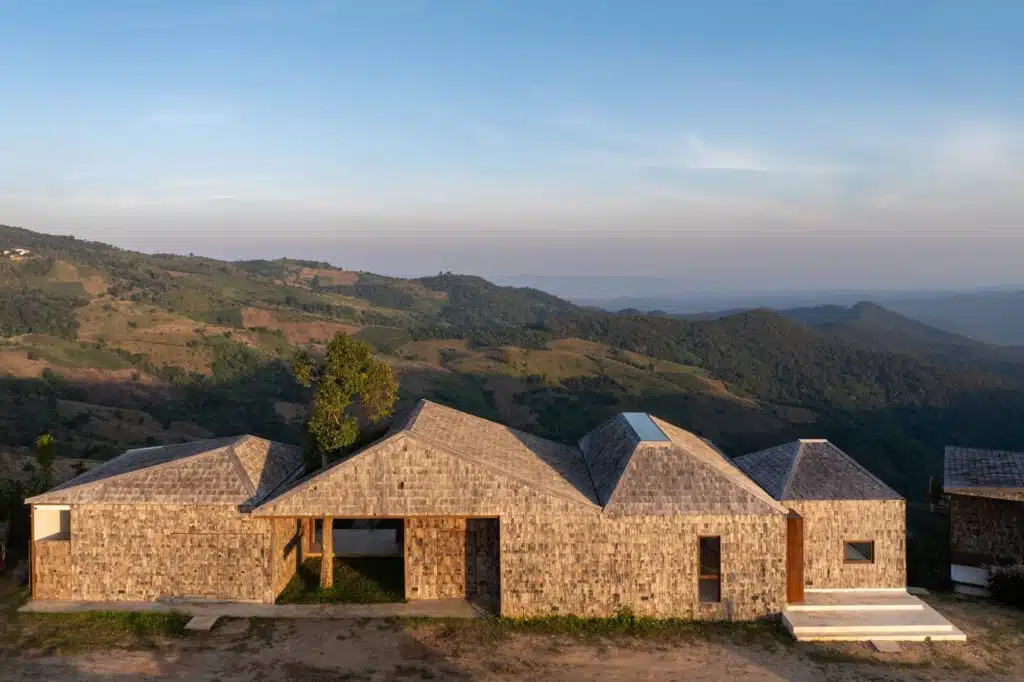
แนวคิดหลักถูกถ่ายทอดผ่านรูปฟอร์มอาคารและการวางตัวของมวลอาคาร (Building Form & Massing) โดยสถาปนิกตีความลักษณะภูมิประเทศของพื้นที่ภูเขาออกมาเป็นองค์ประกอบทางสถาปัตยกรรม รูปทรงอาคารถูกออกแบบให้เปรียบเสมือนการเรียงตัวของแนวภูเขา ขณะที่เส้นสายความลาดเอียงของหลังคาสะท้อนภาพของเนินเขาและสภาพภูมิประเทศตามธรรมชาติ ส่งผลให้อาคารสามารถกลมกลืนไปกับสภาพแวดล้อมได้อย่างแนบเนียน และลดความรู้สึกของการแทรกแซงพื้นที่เดิม
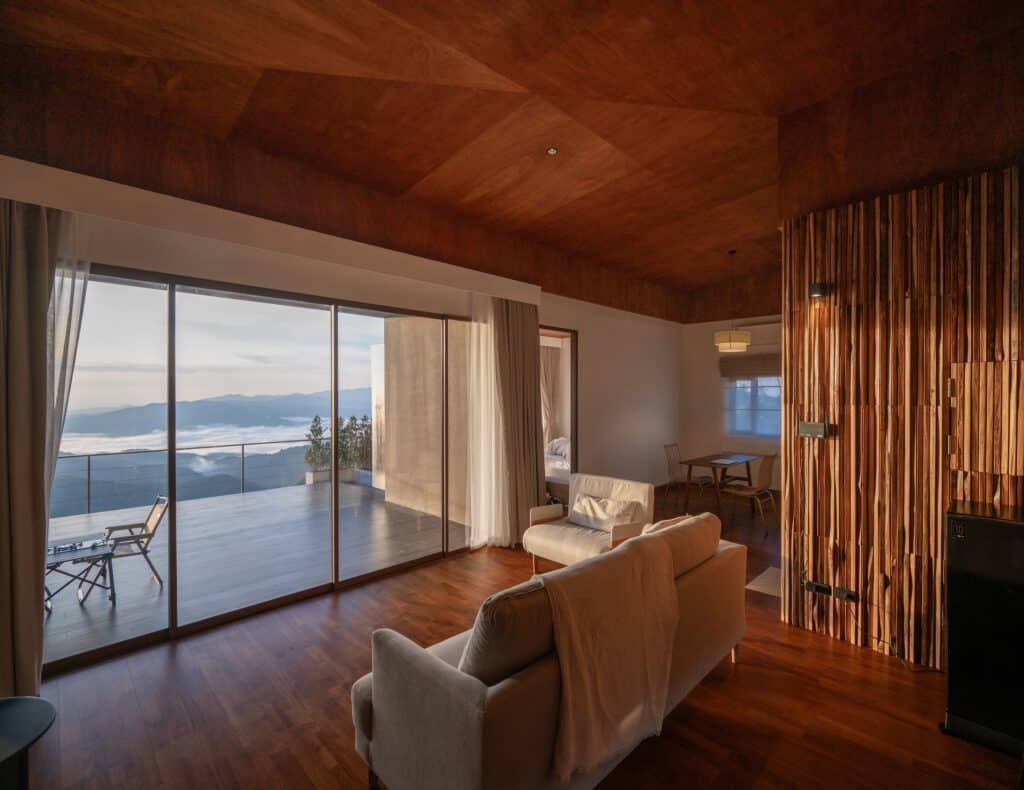
แนวคิดดังกล่าวไม่ได้หยุดอยู่เพียงการแสดงออกทางรูปฟอร์มภายนอก หากแต่ถูกนำมาขยายต่อสู่พื้นที่ภายใน (Interior Space) ผ่านการดึงเอาเส้นสายความเอียงและจังหวะของรูปทรงจากภายนอกเข้าสู่ภายในอาคาร การออกแบบฝ้าเพดานทำหน้าที่เป็นตัวกลางในการเชื่อมโยงภายนอกและภายใน ช่วยสร้างความรู้สึกต่อเนื่องของสเปซ (Spatial Continuity) และก่อให้เกิดประสบการณ์การรับรู้ทางสถาปัตยกรรมที่ลื่นไหลและเป็นธรรมชาติ
ในด้านการออกแบบช่องเปิด สถาปนิกเลือกใช้ช่องเปิดขนาดใหญ่ (Large Openings) เพื่อเชื่อมโยงมุมมองระหว่างพื้นที่ภายในและภายนอกอาคาร เปิดรับทัศนียภาพของธรรมชาติเข้าสู่พื้นที่ใช้งาน ขณะเดียวกัน ช่องแสงสกายไลท์ (Skylight) ถูกออกแบบเพื่อดึงแสงธรรมชาติเข้ามาสู่พื้นที่โถงภายใน เสริมสร้างบรรยากาศและจังหวะของแสงตลอดทั้งวัน สอดคล้องกับแนวคิดหลักที่มุ่งเน้น “ความสัมพันธ์และความเชื่อมโยง” ระหว่างสถาปัตยกรรมกับบริบททางธรรมชาติ
วัสดุและแนวคิดความยั่งยืน
ด้วยที่ตั้งของโครงการซึ่งอยู่บนพื้นที่ภูเขา “ต้นไม้” ถูกตีความให้เป็นเสมือนประชากรหลักของพื้นที่ สถาปนิกจึงเลือกใช้ไม้เป็นวัสดุหลักของโครงการ อย่างไรก็ตาม การเลือกใช้วัสดุไม่ได้ตั้งอยู่บนเหตุผลด้านความงามเพียงอย่างเดียว หากแต่ตั้งคำถามถึงการใช้ทรัพยากรอย่างคุ้มค่า และผลกระทบที่มีต่อสิ่งแวดล้อมในระยะยาว
แนวคิดดังกล่าวถูกนำมาปรับใช้ผ่านกระบวนการ Reuse และ Upcycle โดยนำแผ่นแป้นเกล็ดหลังคาไม้ที่ได้จากการรื้อถอนเรือนพื้นถิ่นในพื้นที่ รวมถึงเศษวัสดุไม้เหลือใช้จากอุตสาหกรรมแปรรูปไม้ มาพัฒนาเป็นส่วนหนึ่งของงานออกแบบ แผ่นแป้นเกล็ดหลังคาไม้สักถูกนำมาใช้เป็นผิวอาคาร (Building Skin) แทนการใช้ไม้แปรรูปใหม่ ช่วยลดการใช้ทรัพยากรและคงคุณค่าของวัสดุเดิมไว้
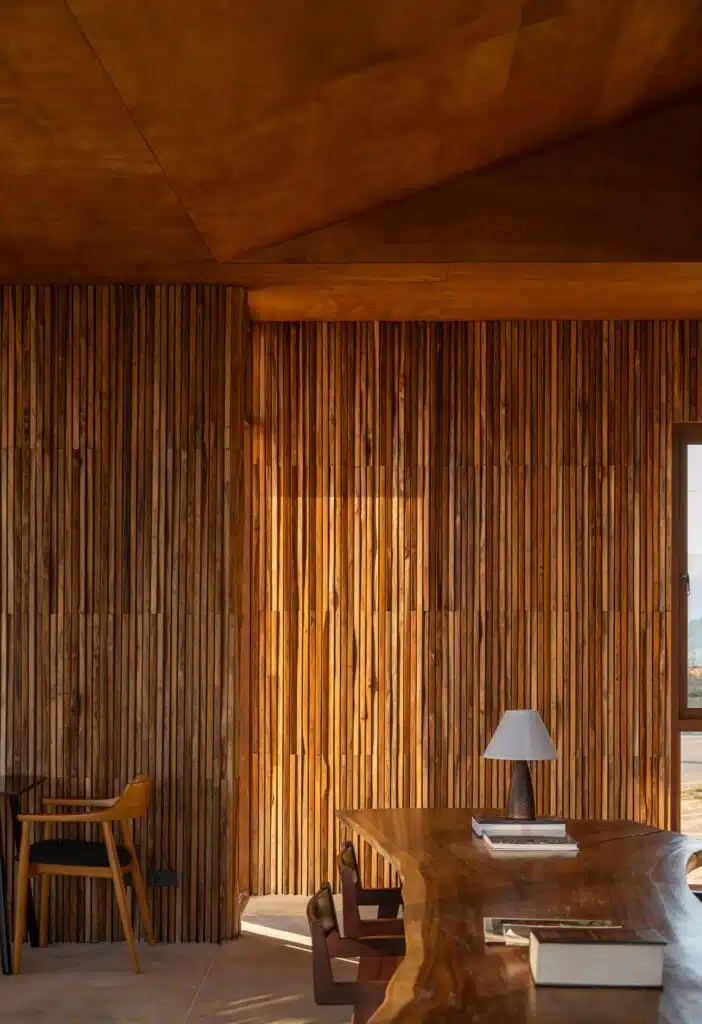
ขณะเดียวกัน กระพี้ไม้ซึ่งเป็นเศษเหลือจากการตัดไม้แผ่น ถูกนำมาใช้กับผนังภายใน เพื่อสร้างมิติของพื้นผิวและเงาเมื่อแสงตกกระทบ เส้นเฉียง เส้นโค้ง และลักษณะตามธรรมชาติของเนื้อไม้ถูกขับเน้นอย่างตั้งใจ เกิดบรรยากาศแบบ Rustic ที่สะท้อนความเป็นท้องถิ่น (Local Identity) อย่างชัดเจน
นอกจากนี้ เศษหัวไม้ (End Grain) ยังถูกนำมาออกแบบเป็นพื้นไม้ปาเก้ เพื่อลดการใช้ไม้แผ่นเต็ม และก่อให้เกิดลวดลายและแพทเทิร์นใหม่ที่มีเอกลักษณ์เฉพาะตัว ความงามที่เกิดขึ้นจึงไม่ได้มาจากวัสดุใหม่ หากแต่เป็นผลลัพธ์ของการให้คุณค่ากับเศษวัสดุเหลือใช้ และสะท้อนแนวคิดการออกแบบอย่างยั่งยืน (Sustainable Design) ในอีกรูปแบบหนึ่ง โดยโครงการได้รับความร่วมมือและองค์ความรู้ด้านการใช้วัสดุเหลือใช้จาก Champaca Wood
ท้ายที่สุด วัสดุจากธรรมชาติทั้งหมดได้หลอมรวมเข้ากับสถาปัตยกรรมเพื่อสร้างประสบการณ์การพักผ่อนที่อบอุ่น สงบ และเป็นธรรมชาติ The Wood Cabin จึงไม่เพียงเป็นที่พักอาศัย หากแต่เป็นพื้นที่ที่เชื่อมโยงผู้ใช้งานเข้ากับบริบทโดยรอบ และเปิดโอกาสให้สถาปัตยกรรมทำหน้าที่เป็นสื่อกลางระหว่างมนุษย์และธรรมชาติอย่างแท้จริง
The Wood Cabin
Architecture in Harmony with Nature and Design
The Wood Cabin originates from a fundamental design intention to create a retreat that allows its occupants to experience a close and genuine connection with nature. Rather than positioning architecture as an isolated object, the project is conceived as an integral part of the landscape—one that exists in dialogue with its surrounding context.
The core concept is articulated through the building form and massing. Drawing inspiration from the mountainous terrain, the architecture interprets the natural topography as a spatial and formal generator. The building volumes are arranged to resemble the layering of mountain ridges, while the sloping rooflines echo the contours of hills and natural landforms. This approach enables the architecture to blend seamlessly into its environment, minimizing visual intrusion and reinforcing its relationship with the existing landscape.
This conceptual continuity extends beyond the exterior and is carried into the interior spaces. Slanted lines and geometries derived from the external form are translated into interior elements, particularly through ceiling design. These gestures establish a sense of spatial continuity between outside and inside, allowing boundaries to dissolve and creating a fluid architectural experience that feels intuitive and natural.
Large openings are carefully positioned to connect interior spaces with the surrounding scenery, framing views and drawing the landscape into everyday use. In parallel, skylights are introduced to bring natural daylight into the heart of the building, enriching the interior atmosphere and accentuating the changing qualities of light throughout the day. Together, these strategies reinforce the project’s central theme of connection—between architecture, users, and nature.
Materiality and Sustainability
Situated within a mountainous forest context, trees are interpreted as the primary “inhabitants” of the site. Timber is therefore selected as the project’s main material, not merely for its aesthetic qualities, but as a conscious response to the site itself. Material selection is approached with an emphasis on resource efficiency and environmental responsibility rather than visual expression alone.
This strategy is realized through the use of reuse and upcycling practices. Reclaimed wooden roof shingles sourced from dismantled local vernacular houses, along with surplus timber from the wood-processing industry, are reintegrated into the architectural design. The project benefits from the collaboration and material expertise of Champaca Wood, whose knowledge of reclaimed and leftover timber informed both design and construction processes.
Reclaimed teak roof shingles are repurposed as the building skin, replacing newly processed timber and reducing material waste. Sapwood offcuts—typically discarded during timber cutting—are used as interior wall finishes, creating depth, texture, and nuanced shadow play as light moves across the surfaces. The natural curves, imperfections, and grain patterns of the wood are intentionally revealed, contributing to a restrained rustic character that reflects a strong sense of local identity.
In addition, end-grain wood remnants are transformed into parquet flooring, minimizing the use of full timber boards while generating distinctive patterns and material richness. The resulting aesthetic emerges not from standardized materials, but from the creative reuse of leftovers—demonstrating an alternative approach to sustainable architectural design.
Ultimately, the natural materials, spatial strategies, and architectural intent converge to create a calm and immersive retreat. The Wood Cabin is not merely a place to stay, but an architectural experience—one that encourages occupants to slow down, engage with their surroundings, and reconnect with nature through space, light, and material.