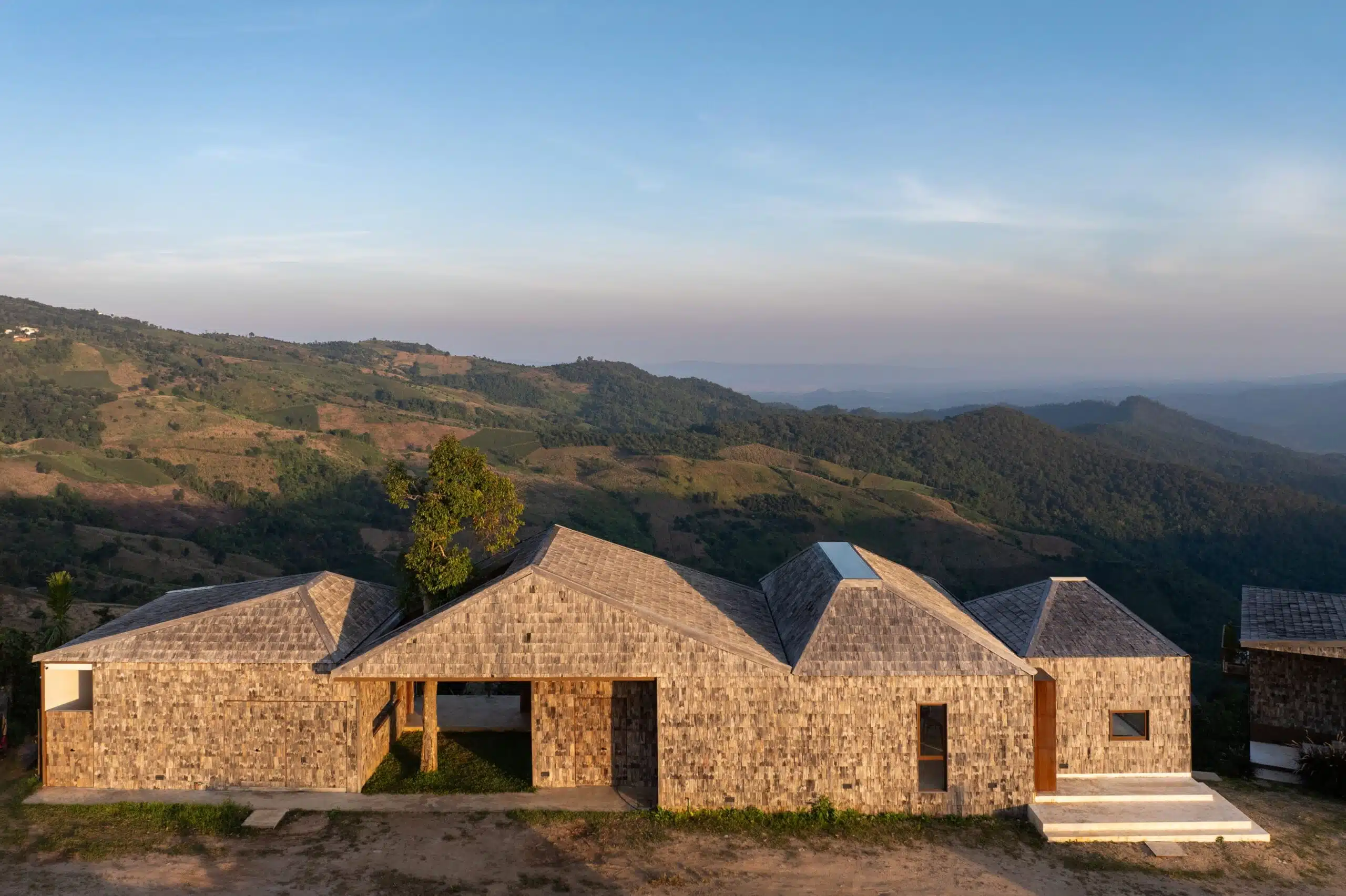
The Wood Cabin originates from a fundamental design intention to create a retreat that allows its occupants to experience a close and genuine connection with nature. Rather than positioning architecture as an isolated object, the project is conceived as an integral part of the landscape—one that exists in dialogue with its surrounding context.
The core concept is articulated through the building form and massing. Drawing inspiration from the mountainous terrain, the architecture interprets the natural topography as a spatial and formal generator. The building volumes are arranged to resemble the layering of mountain ridges, while the sloping rooflines echo the contours of hills and natural landforms. This approach enables the architecture to blend seamlessly into its environment, minimizing visual intrusion and reinforcing its relationship with the existing landscape.
This conceptual continuity extends beyond the exterior and is carried into the interior spaces. Slanted lines and geometries derived from the external form are translated into interior elements, particularly through ceiling design. These gestures establish a sense of spatial continuity between outside and inside, allowing boundaries to dissolve and creating a fluid architectural experience that feels intuitive and natural.
Large openings are carefully positioned to connect interior spaces with the surrounding scenery, framing views and drawing the landscape into everyday use. In parallel, skylights are introduced to bring natural daylight into the heart of the building, enriching the interior atmosphere and accentuating the changing qualities of light throughout the day. Together, these strategies reinforce the project’s central theme of connection—between architecture, users, and nature.
Materiality and Sustainability – Situated within a mountainous forest context, trees are interpreted as the primary “inhabitants” of the site. Timber is therefore selected as the project’s main material, not merely for its aesthetic qualities, but as a conscious response to the site itself. Material selection is approached with an emphasis on resource efficiency and environmental responsibility rather than visual expression alone. This strategy is realized through the use of reuse and upcycling practices. Reclaimed wooden roof shingles sourced from dismantled local vernacular houses, along with surplus timber from the wood-processing industry, are reintegrated into the architectural design. The project benefits from the collaboration and material expertise of Champaca Wood, whose knowledge of reclaimed and leftover timber informed both design and construction processes.
Reclaimed teak roof shingles are repurposed as the building skin, replacing newly processed timber and reducing material waste. Sapwood offcuts—typically discarded during timber cutting—are used as interior wall finishes, creating depth, texture, and nuanced shadow play as light moves across the surfaces. The natural curves, imperfections, and grain patterns of the wood are intentionally revealed, contributing to a restrained rustic character that reflects a strong sense of local identity.
In addition, end-grain wood remnants are transformed into parquet flooring, minimizing the use of full timber boards while generating distinctive patterns and material richness. The resulting aesthetic emerges not from standardized materials, but from the creative reuse of leftovers—demonstrating an alternative approach to sustainable architectural design. Ultimately, the natural materials, spatial strategies, and architectural intent converge to create a calm and immersive retreat. The Wood Cabin is not merely a place to stay, but an architectural experience—one that encourages occupants to slow down, engage with their surroundings, and reconnect with nature through space, light, and material.